
English pronunciation for Spanish speakers: where to start
Fix the English sounds Spanish speakers miss most: vowel pairs, V and B, final consonants, and word stress, with a ten-minute AI feedback loop.
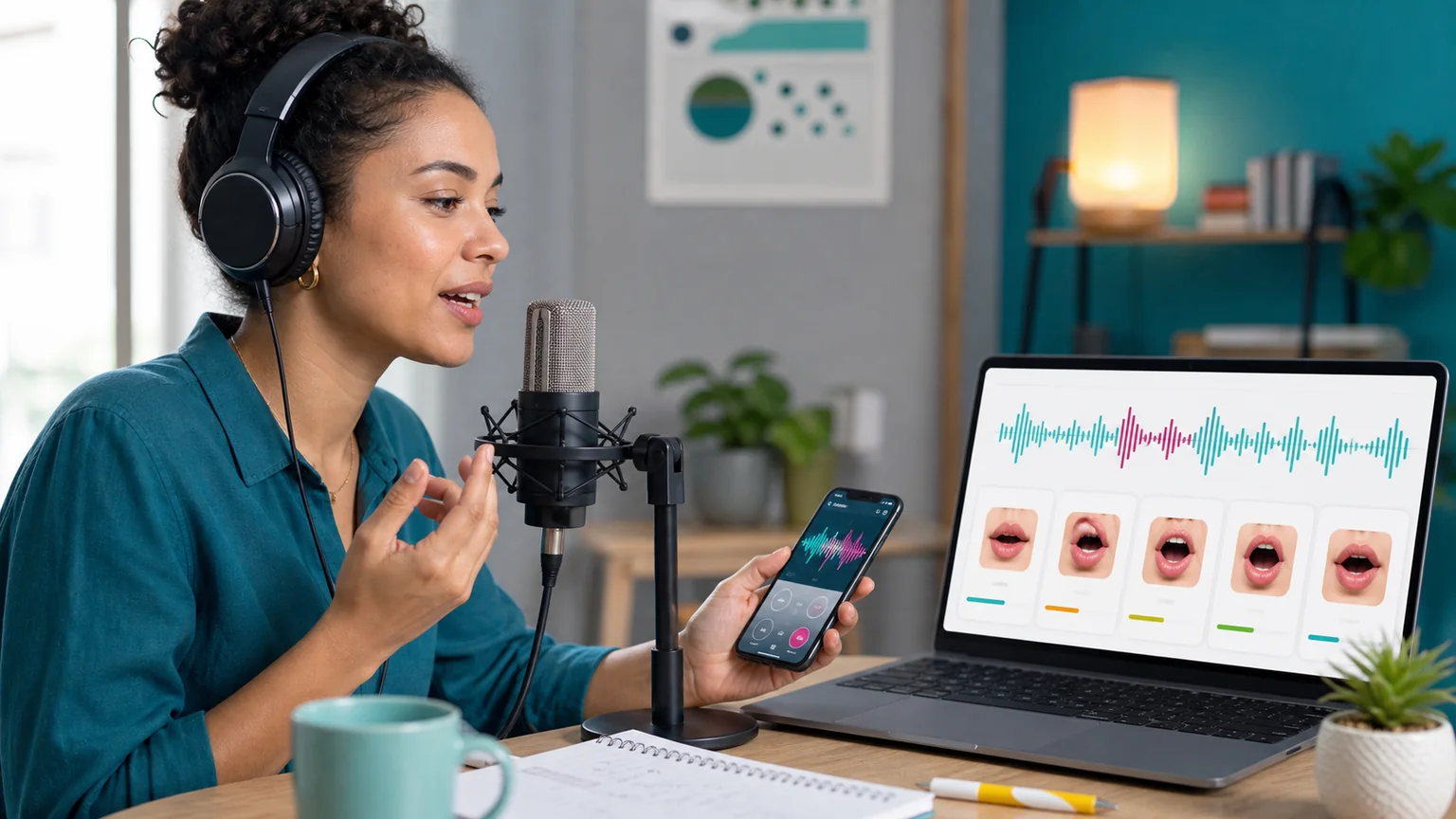
Record one sentence that packs the five targets, such as “Very happy ships carry heavy boxes.” Ask which sounds drift, repeat the corrected sentence three times, then record it again and compare.
The short answer
Spanish speakers improve English pronunciation fastest by drilling five things: the short i in ship versus sheep, the v sound that slips into a b, final consonants, the h in happy, and word stress. Record real sentences, get sound-level feedback, and repeat the corrected sentence in the same session.
- Start with five contrasts: ship/sheep, the v in very, final consonants, the h in happy, and word stress.
- Always request pronunciation feedback with your voice; typed text cannot hear you.
- Repeat the corrected sentence in the same session so the fix sticks.
What this search really wants
Spanish speakers searching for pronunciation help usually want a short list of sounds to fix and a way to hear their own mistakes, not a full phonetics course.
Five sounds worth fixing first
Spanish speakers get the most value from five targets: the short vowel in ship versus the long vowel in sheep, the v sound that tends to become a b, final consonants such as the t in want, the h that disappears in happy, and word stress in long words like vegetable. These five change how understandable you sound more than any letter-by-letter study.
A ten-minute AI feedback loop
Pick one sentence that contains several target sounds, record it with your voice, and ask for sound-level feedback instead of grammar advice. Repeat only the flagged words, then the full sentence, and finish with a clean recording. Ten focused minutes a day beats an hour of passive listening because you correct while the sentence is still fresh.
Spelling traps that hide pronunciation
English spelling rarely tells you how a word sounds. The same letters ea are pronounced differently in heart, head, and heap, and the ending ed changes sound after voiced and voiceless consonants. When feedback flags a word, listen to its audio model in a dictionary and save the word together with the sentence you practiced.
Measure clarity, not perfection
Progress means a listener understands you on the first try. Once a week, record the same paragraph, compare it with the previous week, and count how many words needed a repeat. Fewer repeats on your five target sounds means the method is working, even if your accent still sounds Spanish.
Reproducible examples
english pronunciation for spanish speakers:
- Record “The ship is carrying sheep and very heavy boxes” and ask which vowels and consonants drift from a natural accent. Repeat only the flagged words, then the whole sentence.
- Read a two-line voice message aloud, save the corrected recording, and compare both takes the next day to hear exactly what changed.
Sources and testing
FAQ
Can AI feedback really help a Spanish speaker reduce mistakes?
Yes, when it works on your voice. Sound-level feedback on recorded sentences shows which specific sounds drift, and repeating the corrected sentence immediately builds the new habit. Typed chat cannot hear you, so use the microphone.
How soon will I hear a difference?
Most learners notice clearer vowels and final consonants within two or three weeks of daily ten-minute sessions. The change shows up first in recorded comparisons, then in real conversations when people stop asking you to repeat words.
Practice now
Open HablaYa and start a real voice or text conversation. No credit card required.
Start practicing free